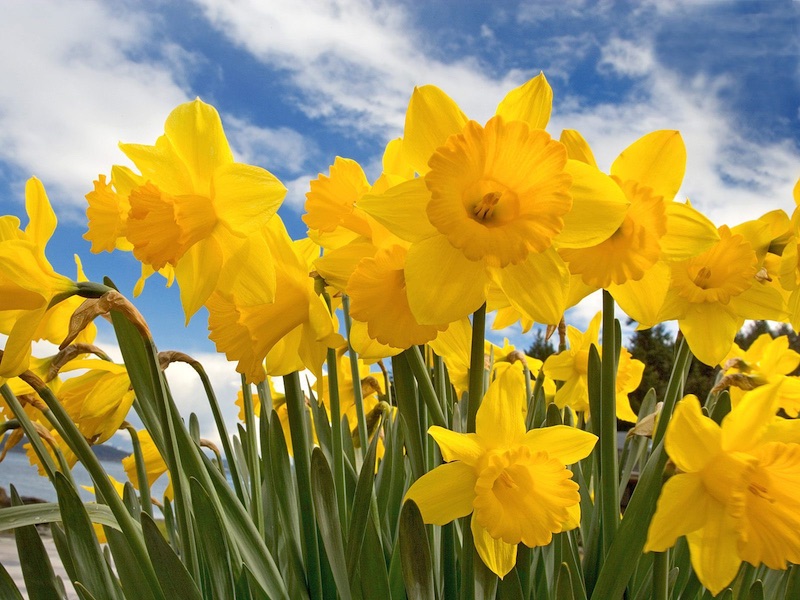
Daffodils
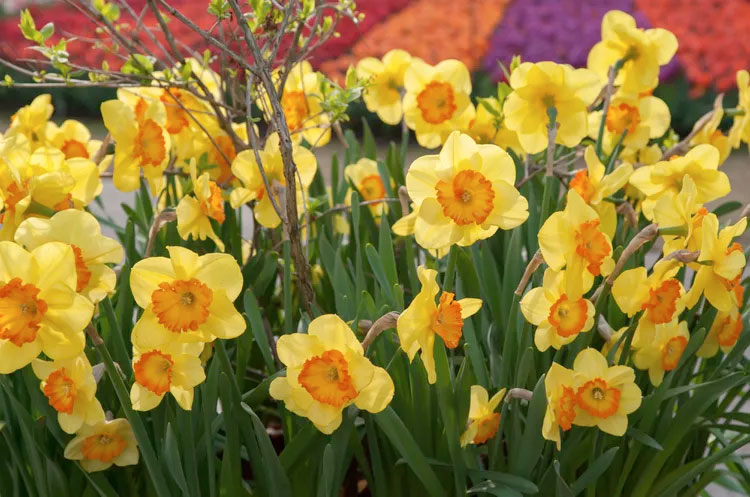
Daffodils (Narcissus spp.) are among the most popular of all spring-flowering perennial bulbs in growing regions that have the winter chill needed for the bulbs to reset themselves. Even in warm regions, daffodils are often purchased as prechilled bulbs and planted as annuals. Clusters of strappy basal leaves appear shortly after winter snows melt, followed shortly by flowers with a trumpet-shaped corona, or cup, encircled by a six-lobed corolla. Depending on the type of daffodil, the corona can be pronounced and large, small, split, or even lampshade-like. Most varieties have blossoms in shades of yellow, but there are also white, orange, pink, and bicolor cultivars. There are more than 40 Narcissus species and over 32,000 registered cultivars. Native to areas of Europe and North Africa, daffodils are best-planted in mid-to-late autumn and will begin to rear their heads in early spring, reaching peak bloom about a month before the average last frost date.
Daffodils contain phenanthridine alkaloids and calcium oxalate crystals that make them toxic to both humans and animals.1 Fatalities are possible if large quantities of bulbs are eaten, and severe skin reactions can occur when the bulbs are handled.